
Robbing
Robbing is a dearth job, not a flow job.
After a nectar flow the yard is still full of foragers, and the ditch is not. Old workers look for a weaker box. Robbing Behavior in Honey Bees is the UF/IFAS paper. This page is that paper. Feed is the light-box job. This is the fight at the entrance.
Robbing behavior typically involves the collection of nectar and honey, but not pollen or brood.
What robbing actually looks like
Western honey bee workers invade and steal honey or nectar from other colonies, or sugar or corn syrup from feeders. That is robbing. It is not a pollen job. It is not a brood job. Some keepers report wax or propolis theft. The paper says there are not many data on that. A few bees can become a frenzy across many colonies in an apiary.
It happens in daylight, usually in a nectar dearth. Colonies grow during a flow. When the flow stops, the yard still has a high population and many foragers, and the field does not. Old foragers go to weaker hives. Weak colonies have fewer guard bees at the entrance, so they get hit first. Central Florida August is that week on the Central Florida table.
The field signs are not subtle. Unusually high numbers flying the yard. Scouts walking the outside of nearby boxes. Fighting at the entrance. Bees trying the gap where two supers meet, around the lid, or the bottom board. A defensive yard. More dead bees at the entrance. Shredded wax cappings or other debris near or under the box, sometimes on the bottom board. They keep going until the source is gone. Hours or days can empty the stores.
A smaller hole, then heft the box
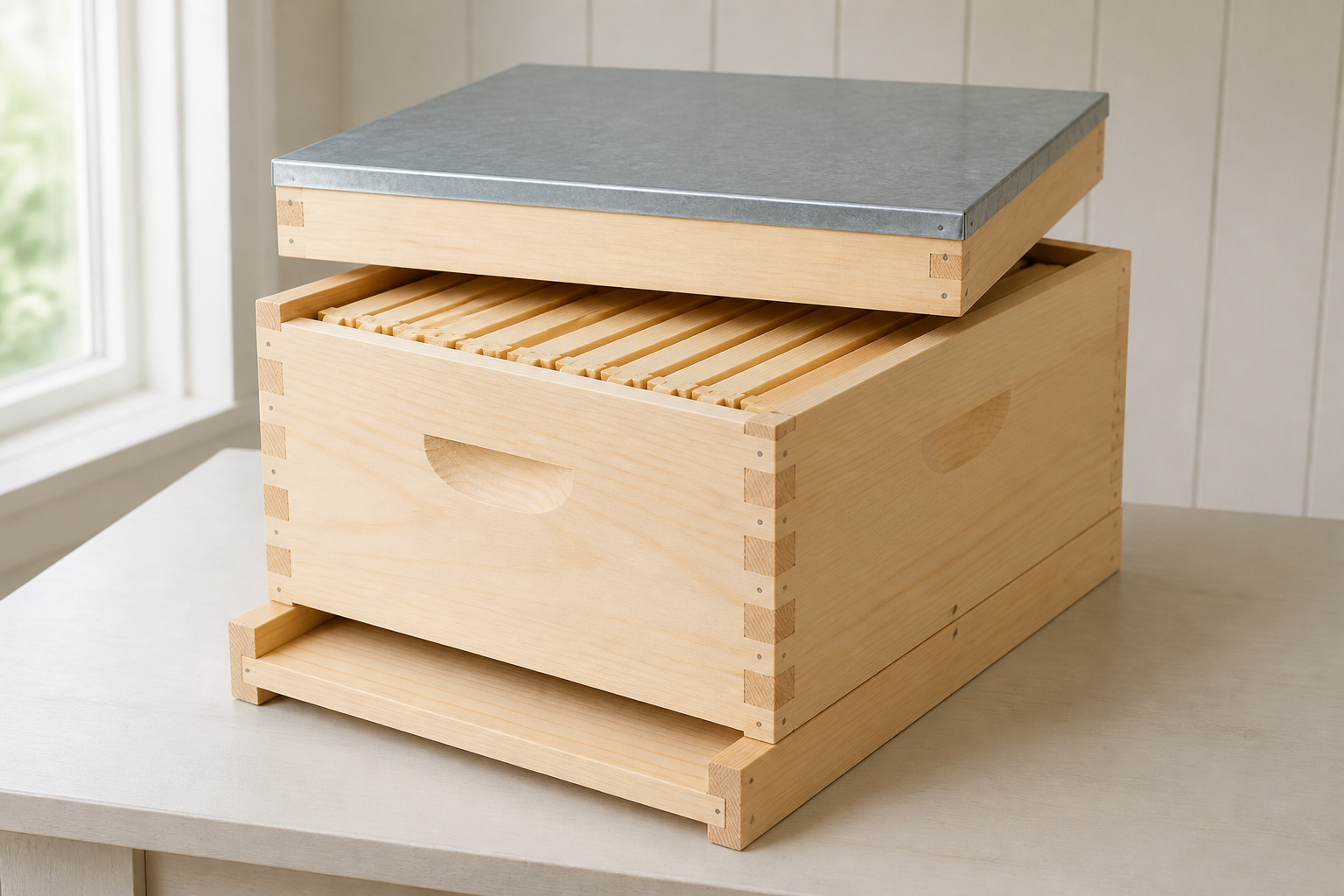
Keeping Bees in Florida puts mid-summer as a decline. Few plants blooming in the north and west of the state. Starvation is a real possibility. Provide water if there is no local source. Take measures such as reducing the size of the entrance to the hive to control robbing. That sentence is the Florida control named here. Cut the entrance to a reducer when the hole is still flow-width and the dearth has started. Get this. A telescoping cover closes the lid gap Robbing Behavior in Honey Bees names as a second door. Get this. A feeder of syrup is a second honey source on Robbing Behavior in Honey Bees. Do not leave it open in a dearth yard.
Robbing Behavior in Honey Bees says recognize the dearth in order to anticipate the start. That is why the feed page already covers Feed. Heft first. Then shrink the entrance. A spray is a different paper.
Are they stealing brood?
Not on this paper. Nectar, honey, or syrup from a feeder. Pollen and brood are not the named take.
Can this empty a box in a day?
Robbing Behavior in Honey Bees says they continue until the source is depleted, and that hours or days can take all of the honey and nectar stores.
Sources
- Robbing Behavior in Honey Bees. Daylight dearth. Honey, nectar, syrup. Weak boxes. Field signs. Hours or days to empty stores.
- Keeping Bees in Florida. Mid-summer decline. Reduce the hive entrance to control robbing.
- Florida Beekeeping Management Calendar. Central Florida August: feed if light. The dearth week this page sits in.