
Five-frame boxes
A five-frame nuc is a working colony.
A nucleus colony is a short Langstroth. Same frame length and depth as the production box, just not as wide. Using Nucs in Beekeeping Operations is the UF/IFAS paper. Ellis and Zettel Nalen wrote it in 2010. This page is that paper. Nuc versus package is the Welcome to the Apiary start. This is the yard tool after you already keep bees.
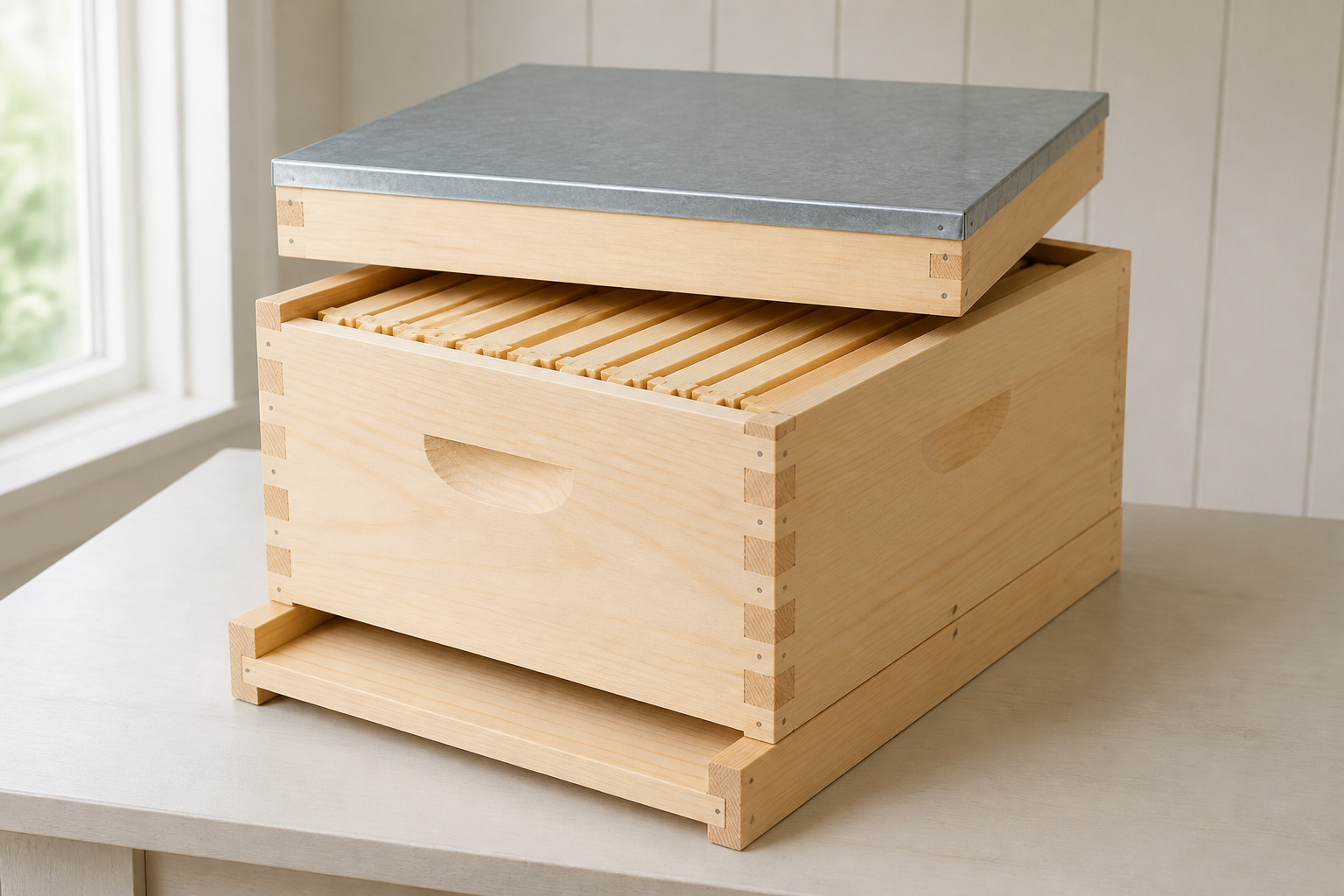
Nucs play an important role in the management of every apiary and should be used by every beekeeper.
What Using Nucs in Beekeeping Operations actually names
A standard nuc holds three to five frames. A full box holds eight to ten. The paper stays on five-frame nucs because those boxes accept ordinary equipment. A baby nuc, or queen mating nuc, is smaller in every dimension. That box is for queen production. It is not this page.
Florida is African honey bee country. When you make a nuc here, have a purchased queen ready. FDACS and UF/IFAS want inspected stock, not a queenless split raising its own from eggs. queen management is the mark and replace paper. AHB is the look-alike. Race is not a comb guess.
You can make nucs through most of the Florida year, February through September. The spring recipe is before the primary honey flow. Summer and early fall work too, after the main flows finish. Late fall and winter are a bad make. New nucs struggle then.
Split the parent, leave the queen
Feed the parent equal parts sugar and water in mid to late February, or when daytime temperatures stay above 60 degrees Fahrenheit. Pollen patties are optional. The point is to get the parent strong enough to lose frames and still rebuild before the flow. Cool late winter means wait. Summer splits can skip that early feed because the parent is already strong. Feeding both boxes still helps them draw comb.
The paper's usual split is two frames of eggs, one frame of capped brood, and one frame of pollen and honey, all with bees, into an empty nuc, plus one frame of foundation. The queen stays in the parent. Put that split in a five-frame nuc, not a spare deep the bees cannot cover in August. Get this. A thinner make is one frame of eggs, one of capped brood, three of foundation, and extra bees shaken in. That thinner nuc needs stores from a feeder because it has no honey frame.
Fill the holes in the parent with four frames of foundation, pulled comb if you have it, toward the outside of the brood nest. Keep feeding the parent two to three weeks in spring so it draws those frames before nectar arrives. Summer parents need that feed longer, or they stall on foundation. A top feeder keeps the parent drawing after you pull frames in February. A jar on the inner cover is the same job. Get this.
If you raise a queen anyway
Outside African bee range a nuc can raise its own. The bees build queen cells on the egg frames. A week after the split, leave two or three of the largest cells and destroy the rest. Ten or more cells is common. Four or more left to hatch raises the chance the nuc issues with more than one virgin. Three to five weeks pass before a mated, laying queen. The population shrinks until her brood emerges. Keep feeding equal parts sugar and water until the spring flow. If you keep fewer than ten colonies, move the queenless nuc to another keeper's yard so the virgin meets unrelated drones. Check that yard for disease first.
Once she lays, clip and mark her. Finding a queen is easier in five frames than in ten. An unmarked queen in a box that started marked is the African invasion clue this paper names. Requeen with known European stock. 2026 is a white mark year.
What a nuc is for
A split four to six weeks before the primary flow is a controlled swarm. Nest congestion is a swarm stimulus. Removing bees and brood takes that stimulus down when it matters. swarming is the swarm control paper. This split is one tool on that list.
Keep one support nuc for every two or three production colonies. During the three weeks before and into the spring flow, pull sealed brood and bees from the nuc and give them to the honey boxes. If the nuc sits in the same yard, shaken workers fly home. Capped brood stays. Emerging bees do not know the old box. If the nuc stays strong, the paper says you can put a nuc queen excluder and a nuc medium super on it and run it like a small colony.
A production box that swarms or goes queenless in a flow loses the crop while it makes a queen. A support nuc puts a laying queen, brood, and bees in that box the same day. Cut queen cells out of the queenless parent first. Cage the incoming queen for three days if you worry the workers will kill her. A failing queen with a spotty pattern gets the same treatment after two or three queenless days, once you have pulled the cells the workers started.
Weak colonies get bees and brood from a nuc, or they move into a nuc when they cannot cover a full box. A short cluster in a ten-frame box is wax moth and small hive beetle ground. small hive beetles is the beetle paper. Condensing them is pest work, not a cute box.
In spring, set a nuc into a full hive body with five frames of foundation. That is a new colony. The paper says a yard can double in a year this way, once the rotation is stable. The 2010 figures on that page priced nucs at $15 to $20 a frame against wholesale honey near $1 a pound. Those numbers are the paper's, not a 2026 list. Demand for nucs was already high then. Honey still waits on rain.
What goes wrong
Nucs need more visits than full boxes. They swarm because the population outgrows the wood. Pull bees and brood, hive them into full equipment, or split again. Food goes fast, especially in winter. Check at least monthly and feed if light. Feed if the box is light is the light-box calendar. Pests hit nucs harder. Treatments dosed for a ten-frame colony are the wrong amount in five frames. Watch the count. Late fall and winter makes starve. Wait until February.
Why buy a queen for a Florida nuc?
African honey bees are here. Using Nucs in Beekeeping Operations wants a purchased queen from a breeder who follows FDACS queen practices, not a queenless nuc raising its own.
How many support nucs?
One for every two or three production colonies. Donate brood weekly in the flow so the honey boxes stay strong and the nuc does not swarm.
Sources
- Using Nucs in Beekeeping Operations. Ellis and Zettel Nalen, 2010. Five-frame nucs, bought queens in Florida, support nucs.
- Swarm Control for Managed Beehives. Splits as swarm control. This paper is the nuc recipe.
- The Basics of Queen Management in Beekeeping Operations. Mark, clip, requeen. Bought Florida stock.