
The mite
The name changed in 2000. The damage did not.
Varroa destructor is the mite this paper means. Varroa destructor is the UF/IFAS Featured Creatures page. Ellis and Zettel Nalen. Until 2000 people blamed Varroa jacobsoni. Anderson and Trueman split the species. destructor does the damage.jacobsoni is only moderately harmful to Western honey bees, on this paper. Native host is Apis cerana in Asia. Western bees got the mite after boxes moved east. The host shift may have taken 50 to 100 years. Varroa is the Florida sample page. This page is the animal.
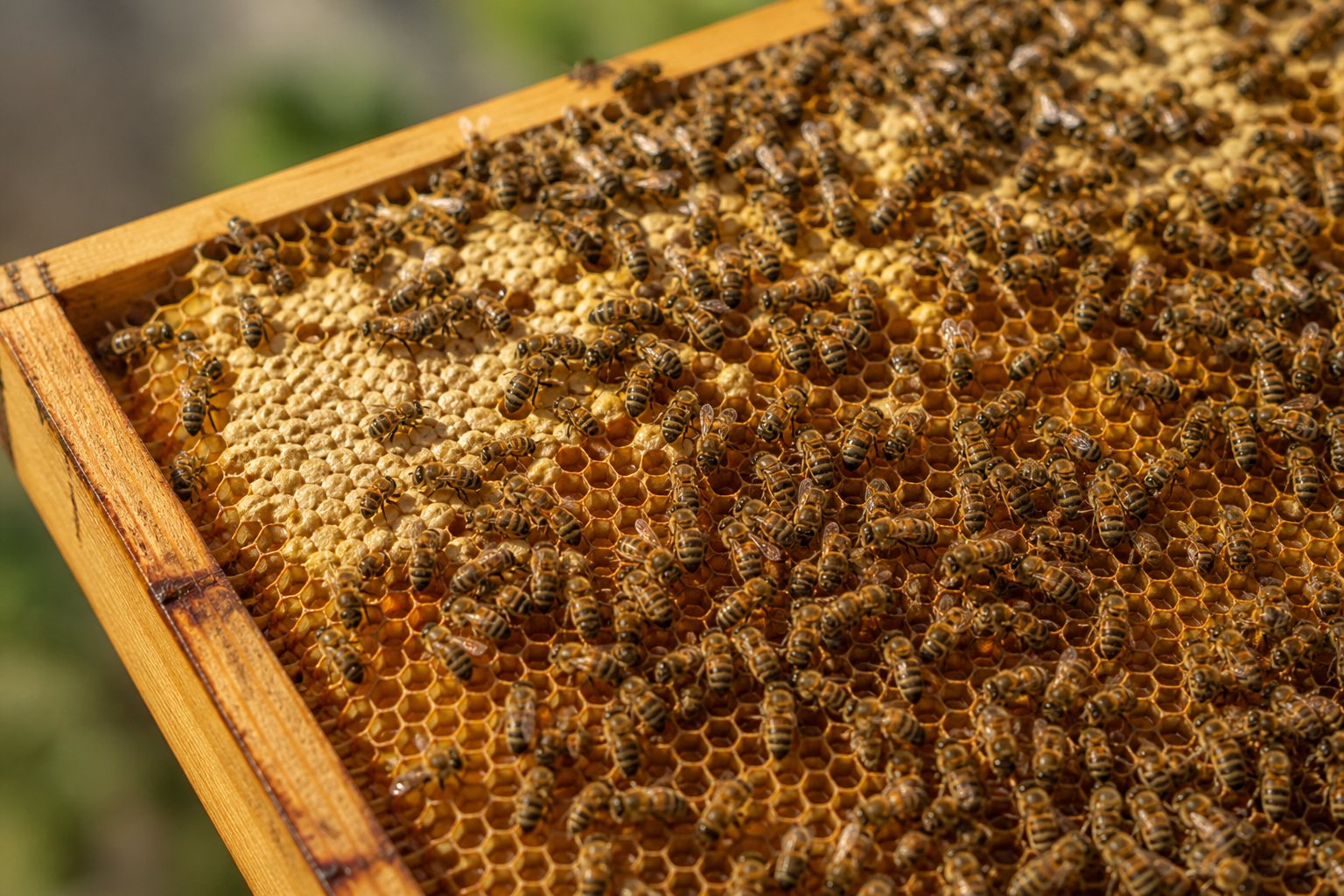
Varroa destructor is the world's most devastating pest of Western honey bees.
Fat bodies, eight legs, reddish-brown
the Varroa destructor species page: they feed on fat bodies of immature and adult bees, not hemolymph as older sheets said. Adult females are reddish-brown to dark brown, oval, about 1.00 to 1.77 mm long and 1.50 to 1.99 mm wide. They tuck into abdominal folds. Males are yellowish, smaller, and they never leave the brood cell. Eggs are white, about 0.30 mm, not a porch ID. You can see a female on an adult bee. A bee louse has six legs. Varroa has eight. Do not mix them.
Phoretic phase: she rides adult bees, walks bee to bee, and can drift into the next colony. Reproductive phase: she enters a cell before it is capped, prefers drone brood, hides in the brood food, then lays. First egg is unfertilized, a male. Later eggs are sisters, every 25 to 30 hours. Egg to adult is six to seven days. She mates in the cell she was born in. Average foundress: about one daughter per worker cell, about two per drone cell. Temperate colonies with brood half the year can see a 12-fold rise. Colonies with brood year-round, 800-fold. Florida is the second number. Varroa already said there is no January crash here.
Look on drone brood. Then sample.
the Varroa destructor species page: a better look than a porch bee is drone brood. White pupae show the reddish mite. Sticky screens, ether rolls, and sugar shakes are the sample tools this paper names. Sticky boards sample the whole colony. Ether kills the bees in the jar. Powdered sugar lets you dump them back. A sticky board samples the whole colony through a screened floor. Get this. Powdered sugar for a shake you dump home. Ether kills the bees in the jar. Get this. viruses is the virus list.
Fluvalinate worked above 90 percent, then mites resisted. These pages does not name a bottle for a Florida yard. Read the label. Screened bottoms on this paper may cut the load as much as 14 percent. Drone brood removal takes a cohort. Powdered-sugar dusting of the whole colony, mineral-oil fog, and small-cell comb had little or no effect on overall populations, on this page. Hygienic bees and VSH, and Russian stock from Baton Rouge in 1997, are the breeding jobs it names. the year board is the month you actually sample.
Is jacobsoni the mite in my box?
No, not for the wrecking kind. The Varroa destructor species page: Anderson and Trueman 2000. destructor does the damage. jacobsoni is the older name people used by mistake.
Can I skip sampling because I treat twice a year anyway?
This paper wants an IPM threshold, not a calendar spray. Florida's working number is still Varroa.
Sources
- Varroa destructor. Ellis and Zettel Nalen. Species split 2000. Fat bodies. Year-round brood.
- Florida Beekeeping Management Calendar. 3 mites per 100 bees. The sample page.
- Common Viruses of Florida Honey Bees. DWV and the rest. The mite vectors.